Not a Blood Moon
Not-A-Blood-Moon-Rachel-Pang_18x5_rgb_web

Not a Blood Moon

Rachel Qing Pang ’23

Physics, Visual Arts

What happens after one spends too many research hours on an unassuming object? Perhaps one begins to see it in a new light. In my case, I began to see the beauty in the randomness of eggs. Amidst the flurry of probability density functions aimed precisely at profiling an egg, I began to admire the very issue that I was hoping to eliminate. These images were captured as part of the research I completed for the International Young Physicists’ Tournament, featuring laser optical transmission through chicken eggs of cooking time 0 through 10 minutes, in two-minute intervals.

Electron-Positron Pumice
1293-x767e428e_web

Electron-Positron Pumice

Arno Vanthieghem (postdoctoral fellow), Anatoly Spitkovsky (faculty)

Astrophysical Sciences

The most energetic sources in the universe, such as gamma ray bursts, act as cosmic particle accelerators producing intense radiation. Blast waves propagating close to the speed of light play a significant role in this process. Some high-energy photons generated near a shock collide, creating pairs that significantly affect the shock dynamics. This figure shows the downstream of a shock, continuously loaded with electron and positron pairs, as part of a study aimed at understanding the backreaction of pair creation on the shock evolution. The color represents the density of the plasma downstream of the shock. The shock transition is outside the frame on the right-hand side.

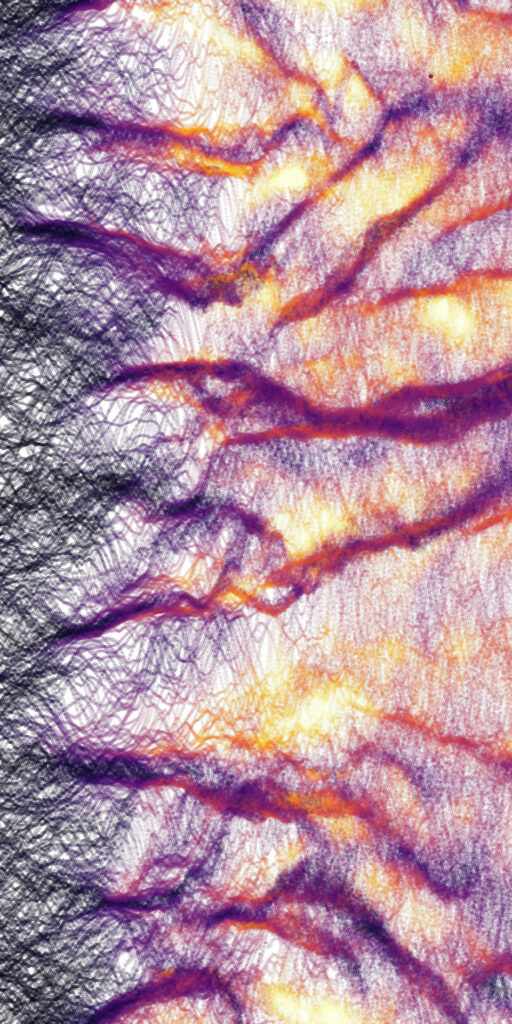
Magnetic Dunes

Magnetic Dunes

Vasileios Tsiolis (graduate student), Anatoly Spitkovsky (faculty)

Astrophysical Sciences

This work depicts the simulated trajectories of 2,000 electrons interacting with a fast shock wave. The horizontal direction represents time, which advances from left to right. The vertical direction is a measure of the physical location of the particle. Each electron trajectory is colored based on the strength of the magnetic field at the electron position at that particular time. The color palette signals the strength of the magnetic field: weak magnetic field structures are shown in shades of dark purple, while strong magnetic fields can be seen in bright yellow regions. At first glance, it may look like the image is the result of continuous random paintbrush strokes. On closer inspection, each trajectory is composed of a finite number of circles, each representing the location of an individual electron at a given time, corresponding to the output of the simulation. In astrophysics, such supersonic waves are encountered in explosive bursts of energy called “supernovae,” that occur towards the end of a massive star’s lifetime thousands of light years away. The interaction of electrons with the filamentary magnetic field structures carried by these waves is thought to be responsible for the emitted radiation that we observe from these distant objects.

A Dodecagonal Quasicrystal Structure From Nature

A Dodecagonal Quasicrystal Structure From Nature

Guangming Cheng (associate research scholar), Nan Yao (faculty), Paul J Steinhardt (faculty)

Princeton Materials Institute, Physics

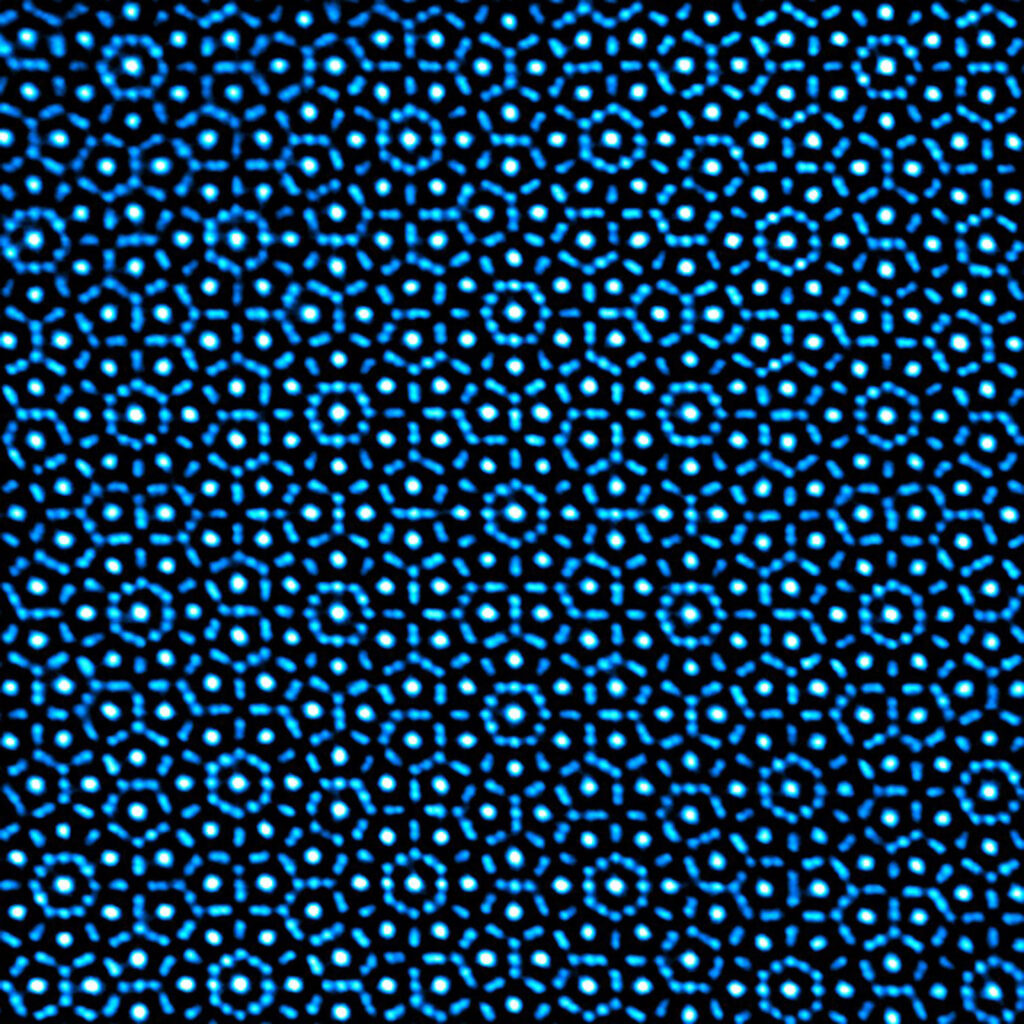
The atomic structure of a dodecagonal quasicrystal consists of equally-spaced atomic layers, each of which has crystallographically forbidden 12-fold symmetry, which doesn’t exist in normal crystals. An electrical discharge event from a lightning strike that downed a power line in 2008 in the eolian (wind-formed) dunes of the Sand Hills in the High Plains of North Central Nebraska led to the accidental creation of a dodecagonal quasicrystal with a heretofore unreported composition.

Possible Intelligent Life

Possible Intelligent Life

Christian Robles ’23, Gaspar Bakos (faculty)

Astrophysical Sciences

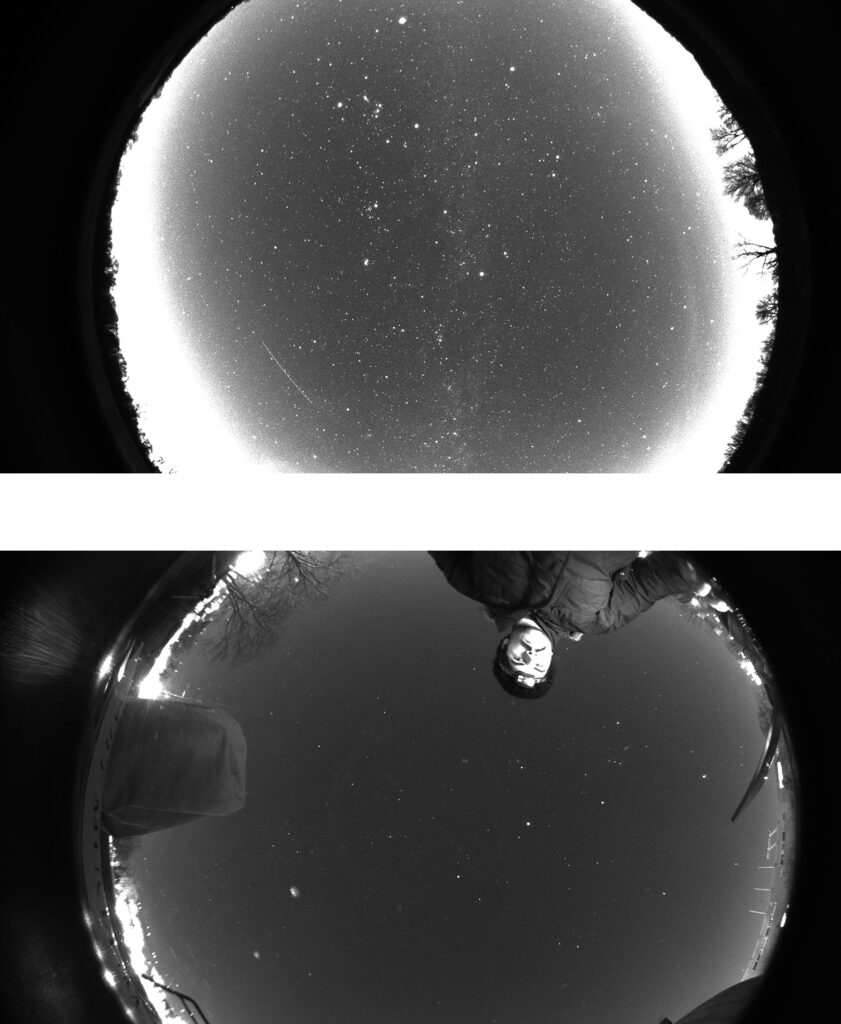
This pair of images was captured by the Princeton All-Sky Camera (PASC) on the roof of Peyton Hall at Princeton University. One image shows exhibitor Christian Robles as he investigates the status of the camera, while the other highlights the night sky. The PASC was designed, built, and operated for independent work through the Department of Astrophysical Sciences. The goal of this project is to characterize the light curves of the brightest stars in the night sky. These measurements require a large field of view and observation taken throughout the night. Both of these conditions make an all-sky camera, such as the PASC, ideal.

Unfrozen, Unattached

Unfrozen, Unattached

Ashley Teng ’23

Computer Science, High Meadows Environmental Institute

While observing ice formations throughout Princeton’s campus, I visited the Fountain of Freedom to take photos of the icicles and I noticed the bright blue color in the frozen fountain pool from deicers. Stress cracks form on sheets of ice due to temperature changes, often when the top of the sheet becomes warmer at a rate faster than the bottom of the sheet.

Fluid Flow Over Tandem Spheres

Fluid Flow Over Tandem Spheres

Mark Lohry ‘22, Luigi Martinelli (faculty)

Mechanical and Aerospace Engineering, Princeton Institute for Computational Science & Engineering

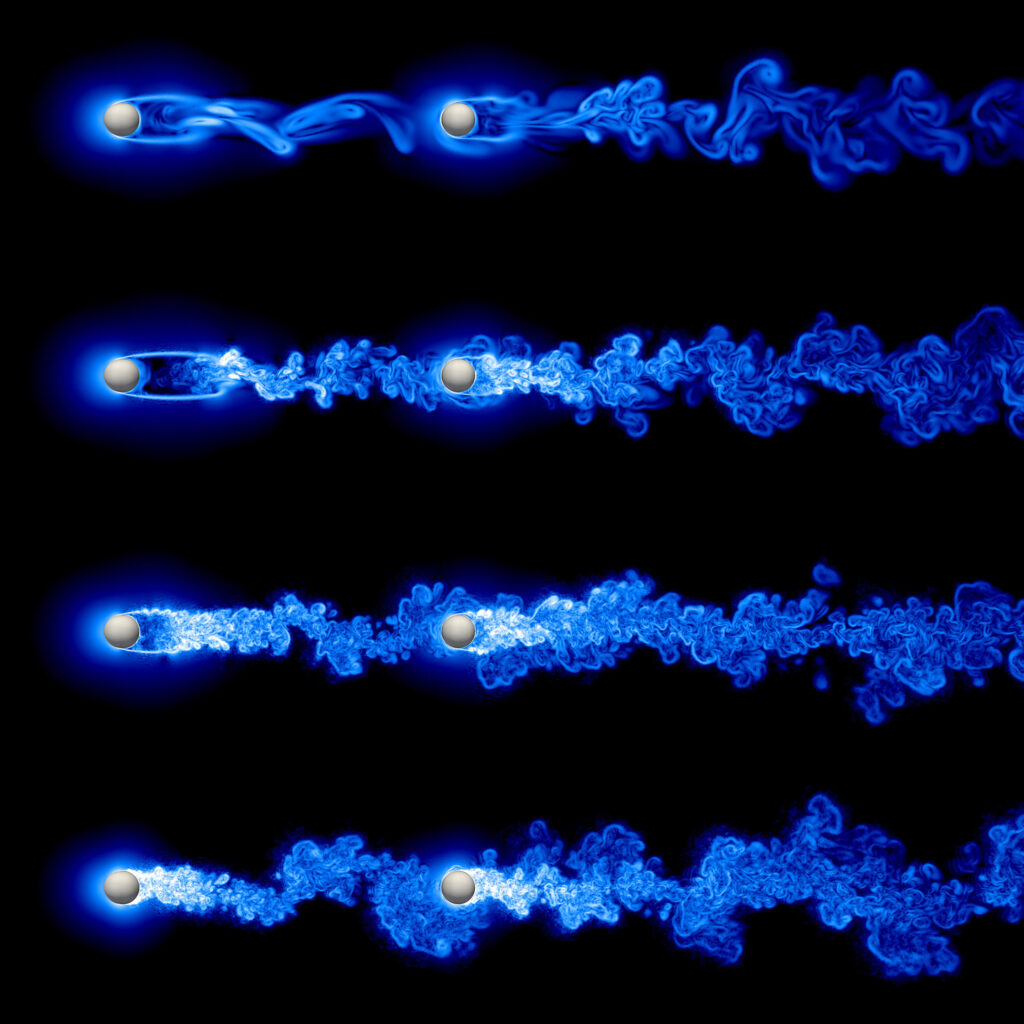
Fluid flowing over simple geometries can exhibit surprisingly complex motion with strong dependence on the fluid’s properties. Here, two spheres separated by 10 diameters are shown at four different values of Reynolds number, a dimensionless measure of the turbulence in fluid flow. While aspects of these flows are chaotic, coherent fine scale vortical structures are seen persisting far downstream of the bodies. These images were produced by high-fidelity computer simulations using numerical methods and software developed by the authors, with research computing resources provided by the Princeton Institute for Computational Science & Engineering.

Looking Down the Barrel

Looking Down the Barrel

Tony Qian (graduate student), Xu Chu (graduate student), Djin Patch (scientist, PPPL), Mohammed Haque (undergraduate, Hunter College), Domonic Seidita (undergraduate, Purdue University), Amelia Chambliss (graduate student, Columbia University), Chris Pagano (engineer, PPPL), Bruce Berlinger (technician, PPPL), Robert Ellis (chief engineer, PPPL), Michael Zarnstorff (principal investigator, PPPL)

Princeton Plasma Physics Laboratory

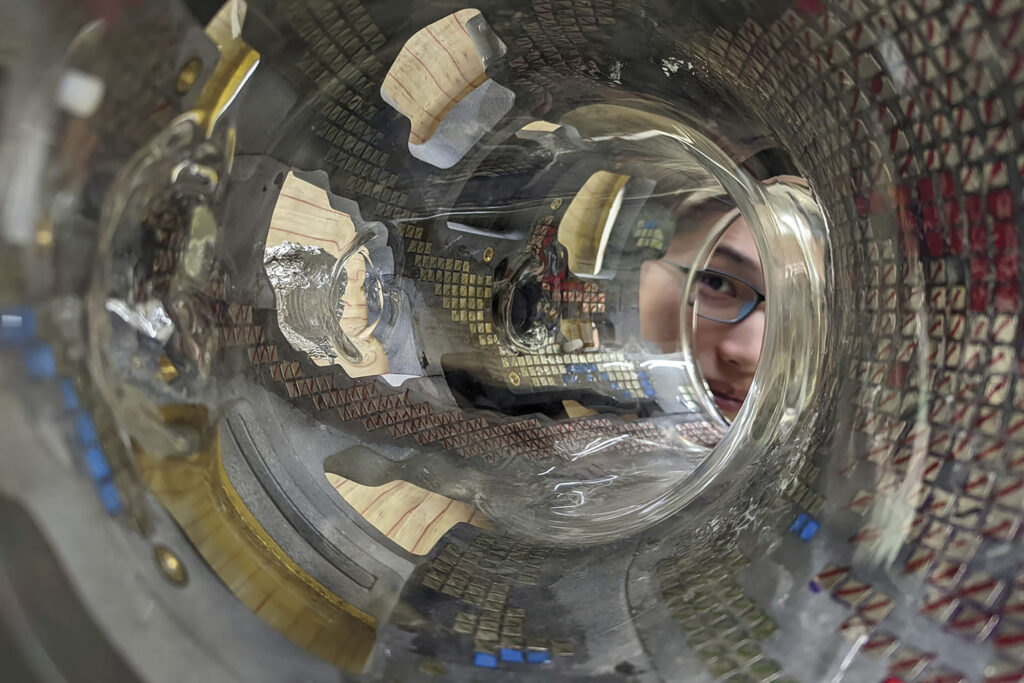
In this picture, you can see graduate student Xu Chu looking through the glass vacuum vessel of the MUSE Permanent Magnet Stellarator. Stellarators are a class of devices used to magnetically confine plasma to produce fusion energy. MUSE, located at the Princeton Plasma Physics Laboratory, will be the world’s first quasi-axisymmetric permanent magnet stellarator.

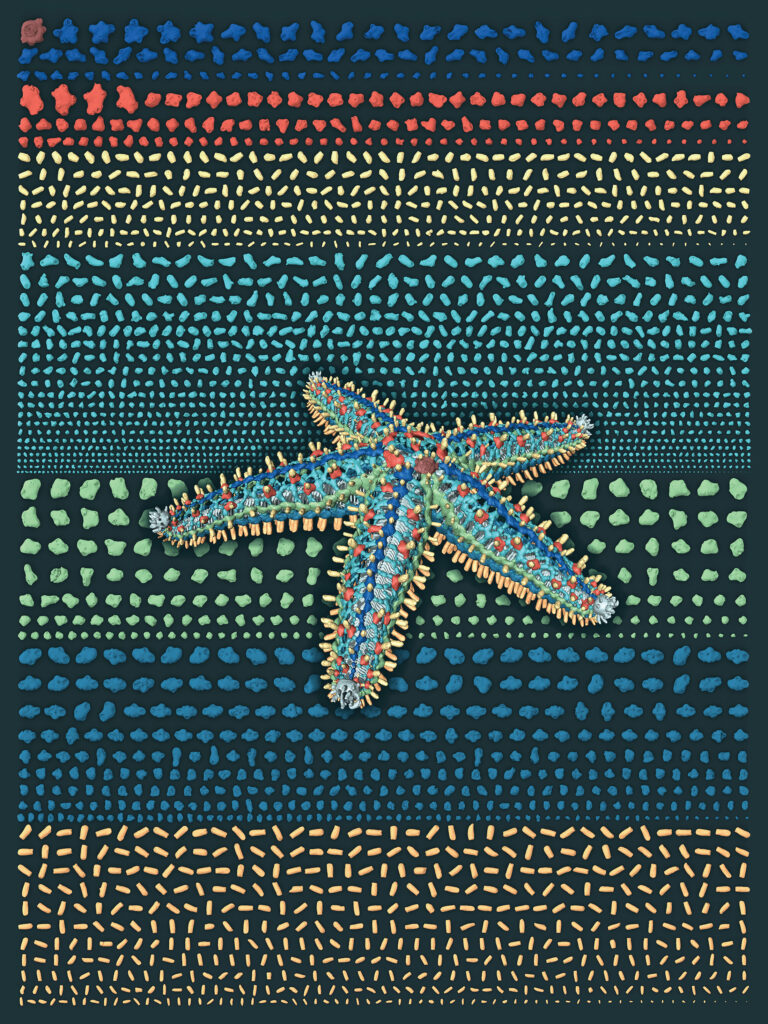
(Jury Award) The Art of Cleanup: Sea Star Skeletal System

The Art of Cleanup: Sea Star Skeletal System

Lara Tomholt (postdoctoral research associate)

Andlinger Center for Energy and the Environment

The skeletal systems of sea stars can consist of thousands of individual elements that exhibit a vast range of shapes and sizes. For the first time, since the recent development of automated segmentation algorithms, these remarkably complex skeletal systems can be mapped and analyzed. Visualized are the 3,264 skeletal elements present in the aboral endoskeleton of the sea star Pisaster giganteus (giant sea star), virtually segmented from the specimen and arranged by type and size. This “Art of Cleanup” allows one to appreciate the sheer complexity of the “mundane” sea star.

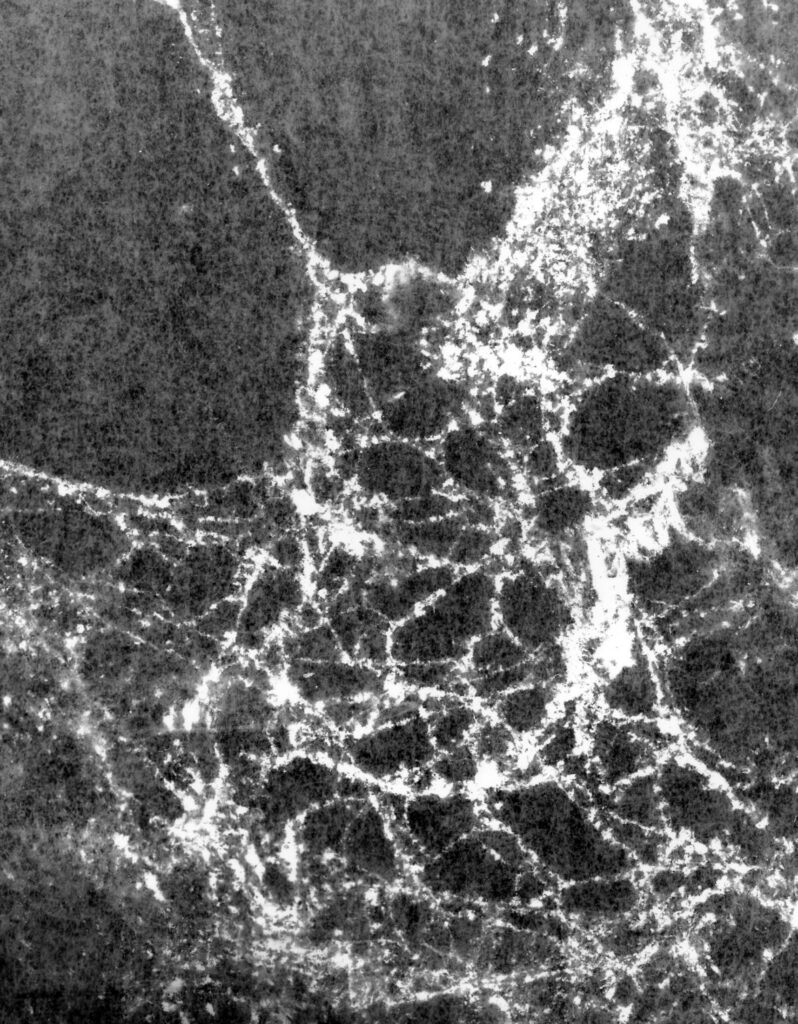
Entangled

Entangled

Annabel Dupont ’23

Anthropology, Visual Arts

This image was made using a makeshift photo negative, created by encasing a spider web coated in powdered charcoal between two sheets of transparent paper. The image was then printed using an enlarger and photo-sensitive paper, the same method used to produce traditional film prints. This process inverts the colors of the negative, making the black-colored web appear white in the image.