Baily’s Beads
Baily's Beads

Baily’s Beads

Vivek Vijayakumar ’25

Astrophysical Sciences

Simon Ji (Graduate Student)

Mechanical and Aerospace Engineering

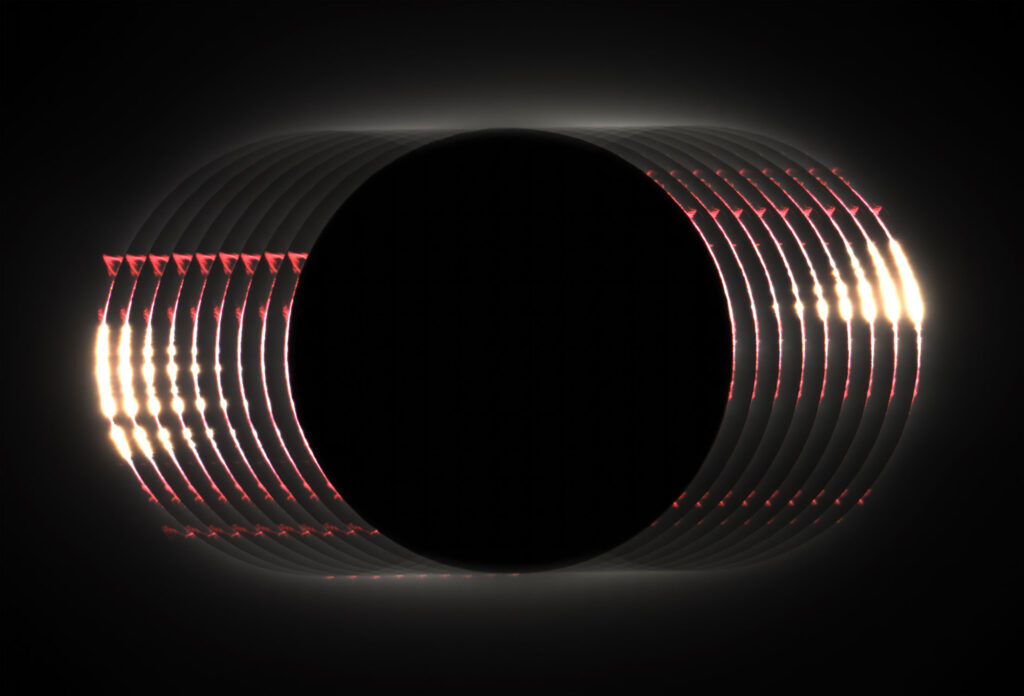
This composite captures the first and last moments of the April 2024 total solar eclipse. It showcases Baily’s beads—a phenomenon where slivers of sunlight shine through the craters and mountains of the Moon’s rugged surface. The  image also reveals bright red solar prominences, plasma structures shaped by the Sun’s magnetic field. Surrounding all these features is the wispy white haze of the solar corona, the Sun’s outer atmosphere.
Residual Silver
Residual Silver

Residual Silver

Mohit-Pal Singh ’25

Computer Science

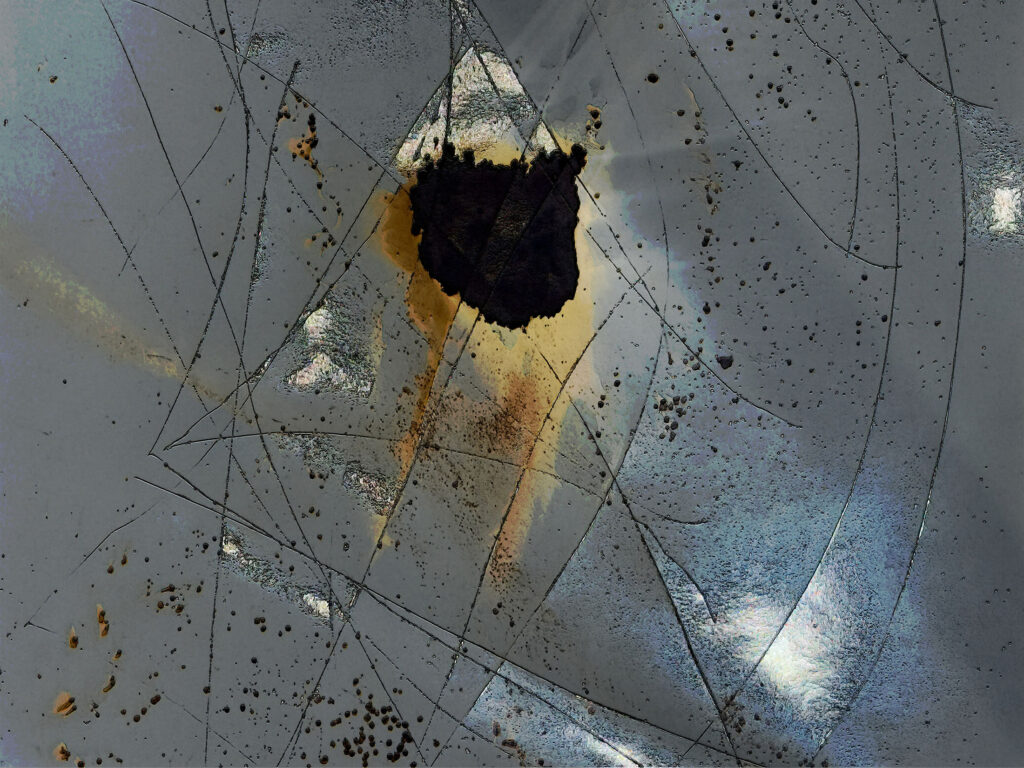
Exposed photographic paper is disrupted through chiseling, followed by an application of potassium permanganate to initiate an oxidation reaction within the silver halide emulsion. A digital high-pass filter is applied to amplify the texture of the surface. The result is an image caught between presence and decay.

This project originated from XXX ###: The Photogram Condition taught by James Welling.

[Honorable Mention] A Tiny Tug-of-War
A Tiny Tug-of-War

A Tiny Tug-of-War

Ezra Levy (Graduate Student)

Molecular Biology

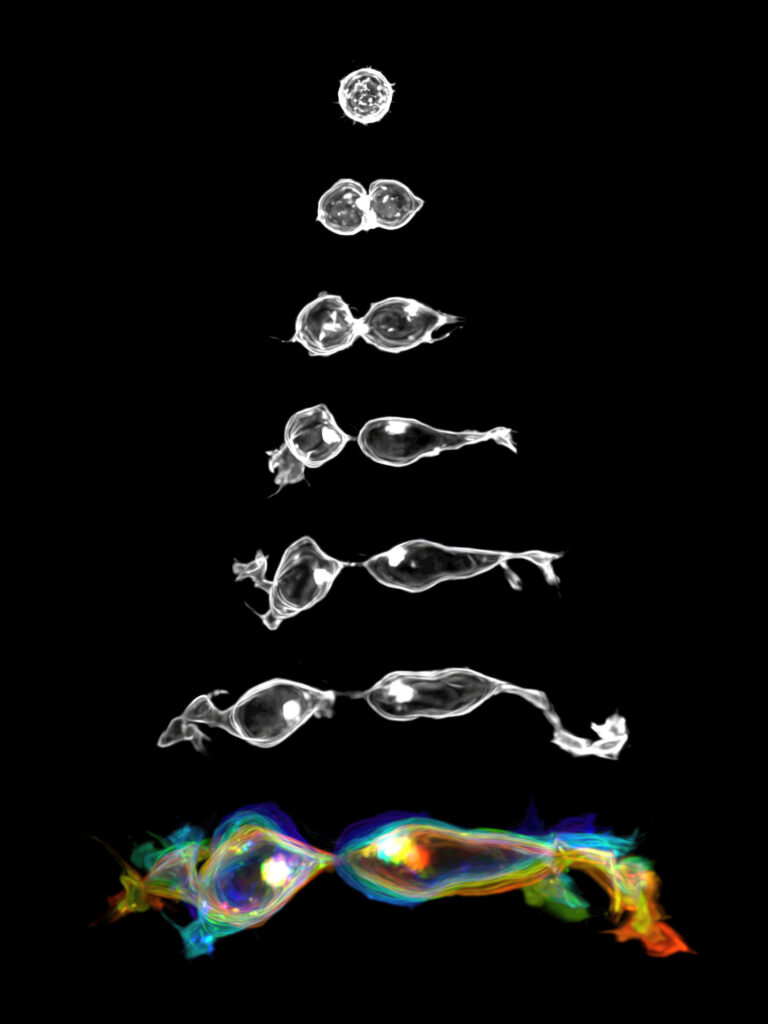
In mammals like humans and mice, egg cells are made all at once in the developing ovary of a female embryo, generating all the future egg cells she will carry with her for life. During this process, not every egg cell divides completely. Most remain connected by a thin (1 μm) bridge, which holds them together, even while they move away from each other. This video reveals, for the first time, the tiny tug-of-war occurring in an embryonic mouse ovary at 11.5 days of gestation—roughly equivalent to one month of human development.

Gacha Tent
Gacha Tent

Gacha Tent

Ruta Stankeviciute (Postdoc)

Civil and Environmental Engineering

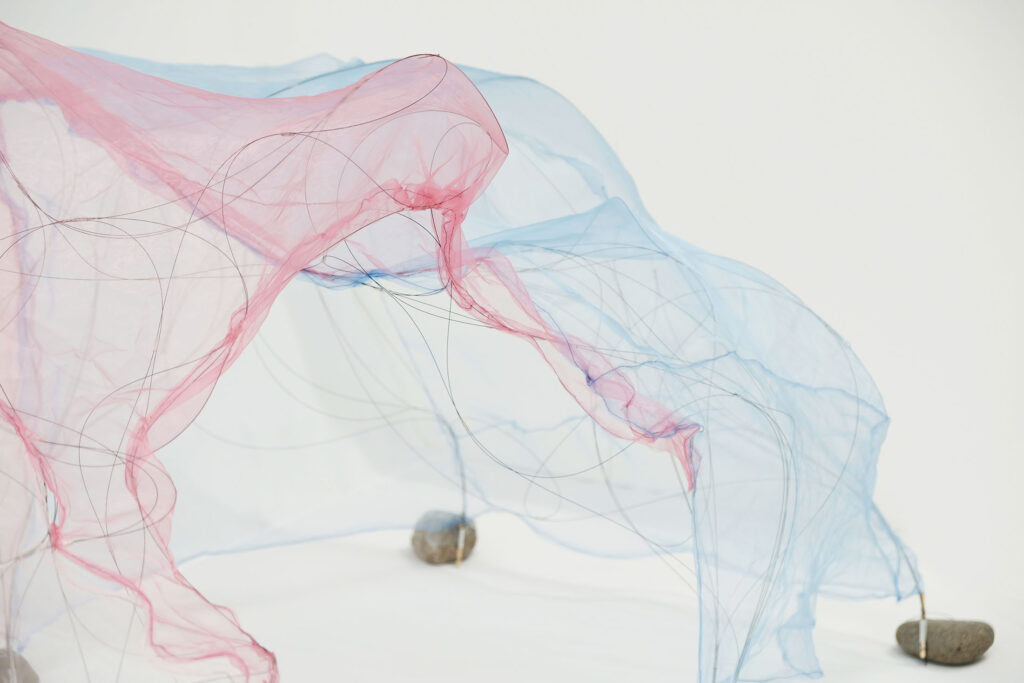
Gacha Tent is a lightweight structure composed of elastic carbon rods and a super organza membrane. It achieves a 1570:1 deployment ratio—four times higher than tents on the market. This is achieved by employing a bend-active
buckling strategy to enhance load-bearing capacity without increasing material mass.

The Gacha Tent project draws inspiration from Japanese gashapon toys, which are sold in 7 cm capsules from vending machines. Like the toys themselves, the tent is designed to fit in one’s pocket.

Into the Stomata
Into the Stomata

Into the Stomata

Ava Daniel ’27

Civil and Environmental Engineering, Architecture, Sabin Design Lab

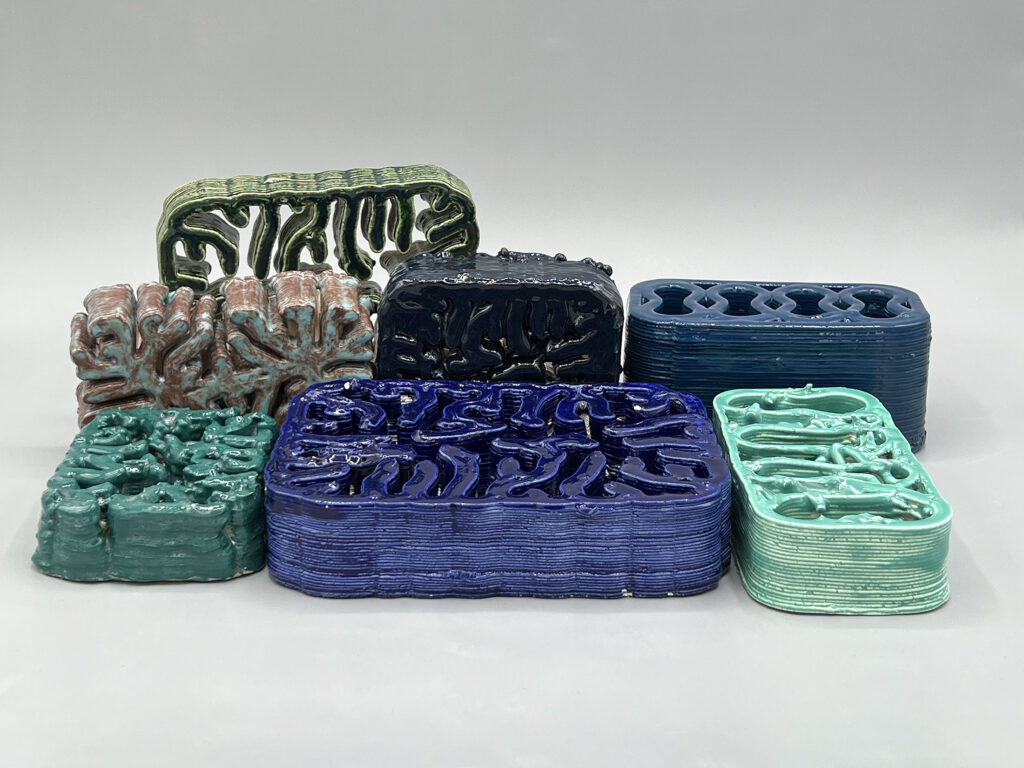
These sculptural bricks are designed to inhibit airflow throughout their structure, mimicking the function of stomata in a plant’s respiratory system. Coated in hues of blue, green, and earthy tones, the colors juxtapose the constructive nature of the bricks. The design invites viewers to explore the architectural parallels between natural systems and built environments.

(Jury Award) Polar Days (#1, 2, and 3)
Polar Days (#1, 2, and 3)

Polar Days (#1, 2, and 3)

Justin Wright (Graduate Student)

Music Composition

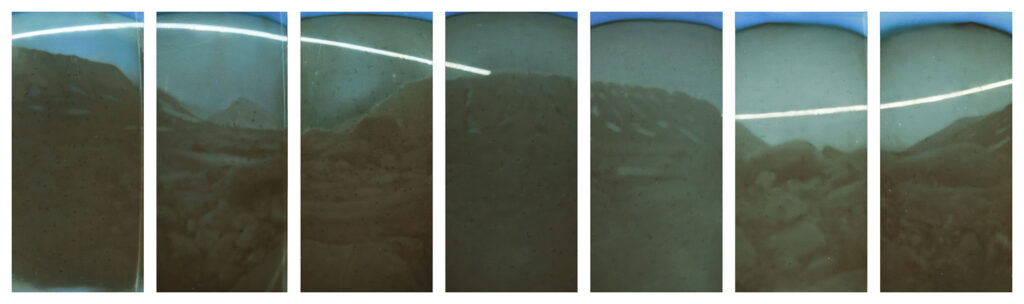
In Svalbard, an archipelago near the North Pole, during summer the sun never sets but circles overhead for months, a phenomenon known as the polar day. Working there over the solstice, I designed and built 360-degree pinhole cameras, exposing them for two weeks. The sun’s path etched so deeply into the photo paper that no development was needed. These are the first analog photos ever to capture the midnight sun’s full path.

Warming at six times the global average, Svalbard acts as a canary in a coal mine for climate research. This image brings the reality of climate change in this distant, little-known place closer to home. Through capturing the otherworldly beauty of this remote region, the photograph illustrates the effects of climate change in a distant, little-known place.

Moon Rock, Apollo 14 14305.18

Moon Rock, Apollo 14 14305.18

Leigh Cole (Staff)

Keller Center

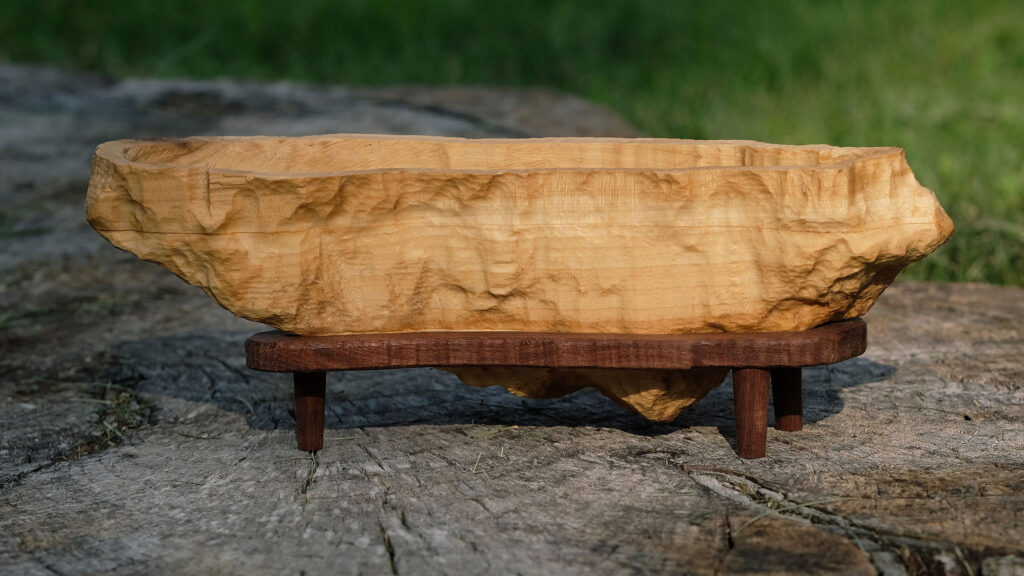
Digital modeling software and fabrication tools were utilized to create a tangible version of an otherwise inaccessible object: a moon rock collected from the Apollo 14 mission. While the original rock remains unavailable to the public, high-resolution 3D scans provided by NASA allow for its reproduction in physical form.

Drawing inspiration from Chinese Gongshi and Japanese Suiseki, the object is meant to be lived with and used, encouraging contemplation of materials, data, and the universe.

(Jury Award) Through the Mirror
Through the Mirror

Through the Mirror

Stephen Majeski (Graduate Student)

Princeton Plasma Physics Laboratory

Patrick Reichherzer (Postdoc)

University of Oxford

Matthew W. Kunz (Faculty)

Robert J. Ewart (Postdoc)

Astrophysical Sciences

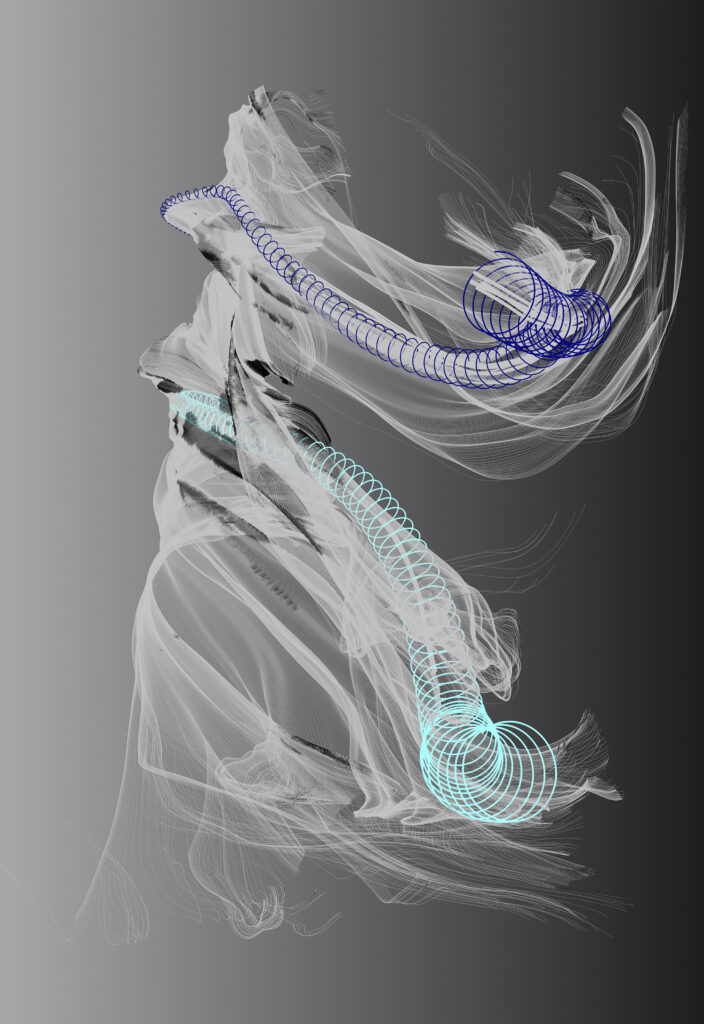
This simulation visualizes the intracluster medium, a magnetized fluid that surrounds clusters of galaxies.

White lines represent magnetic fields along which high-energy particles (seen in blue) propagate. The darker areas represent regions of unstable plasma in which the particles can be deflected by an effect known as “mirror instability.”

Flow of Forces
Flow of Forces

Flow of Forces

Axel Larsson (Graduate Student)

Sigrid Adriaenssens (Faculty)

Civil and Environmental Engineering, Princeton Form Finding Lab

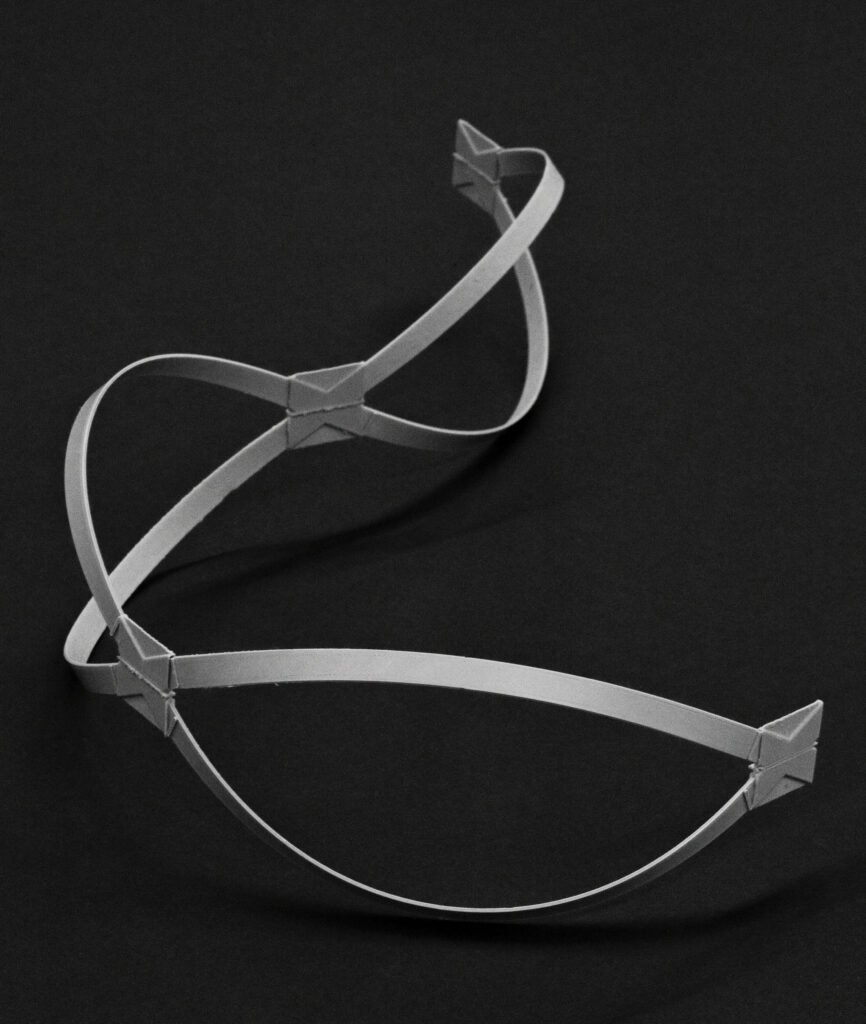
Thin flat strips, connected at both ends with a sufficiently large fixed angle, will buckle to minimize their elastic
energy. This interplay between form and forces creates a new pathway to equilibrium, yielding a multi-stable structure. These types of curves have potential applications in adaptive structures and soft robotics.

Spanning Kirigami Space Frame

Spanning Kirigami Space Frame

Isabel Moreira de Oliveira (Graduate Student)

Civil and Environmental Engineering, Princeton Form Finding Lab

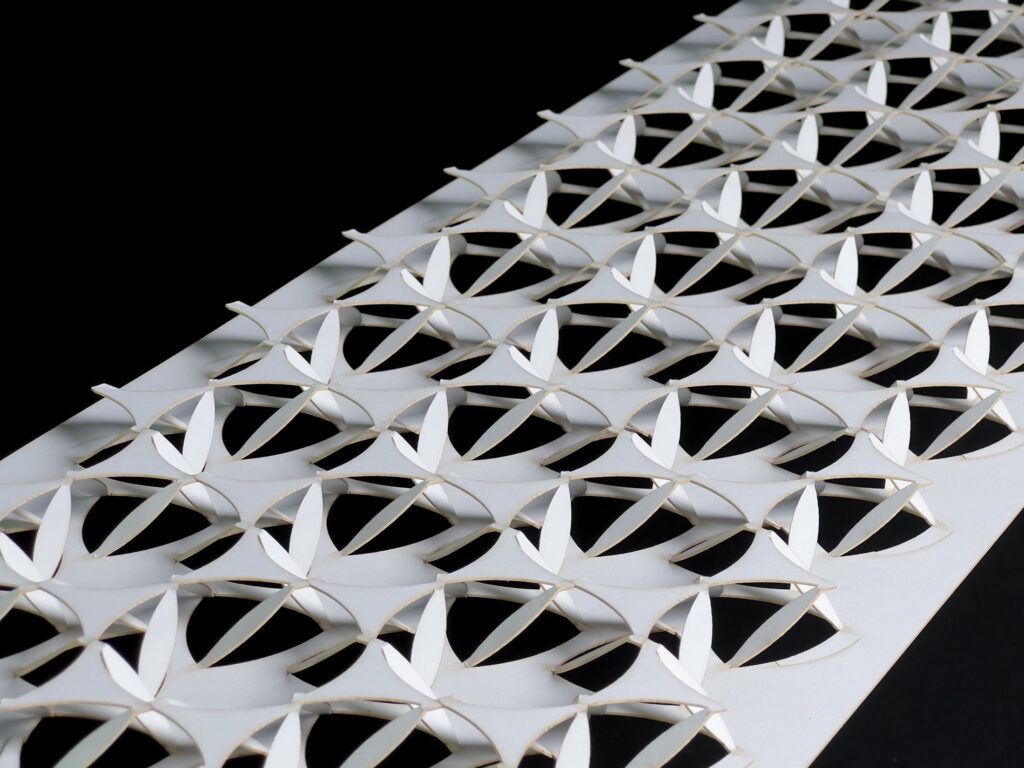
Kirigami is the Japanese art of cutting paper to create three-dimensional forms. It offers a promising solution to mitigate the waste generated by the construction sector, which is responsible for over one-third of the world’s
solid waste.

This piece demonstrates spin-valence kirigami, a technique for creating flat-pack thin sheets that can be efficiently transformed into low-waste, easy-to-build, load-bearing structures. These mechanical structures deform up to twenty times less than their flat counterparts and, with the aid of assembly intelligence, can be produced using fewer resources than traditional manufacturing methods.